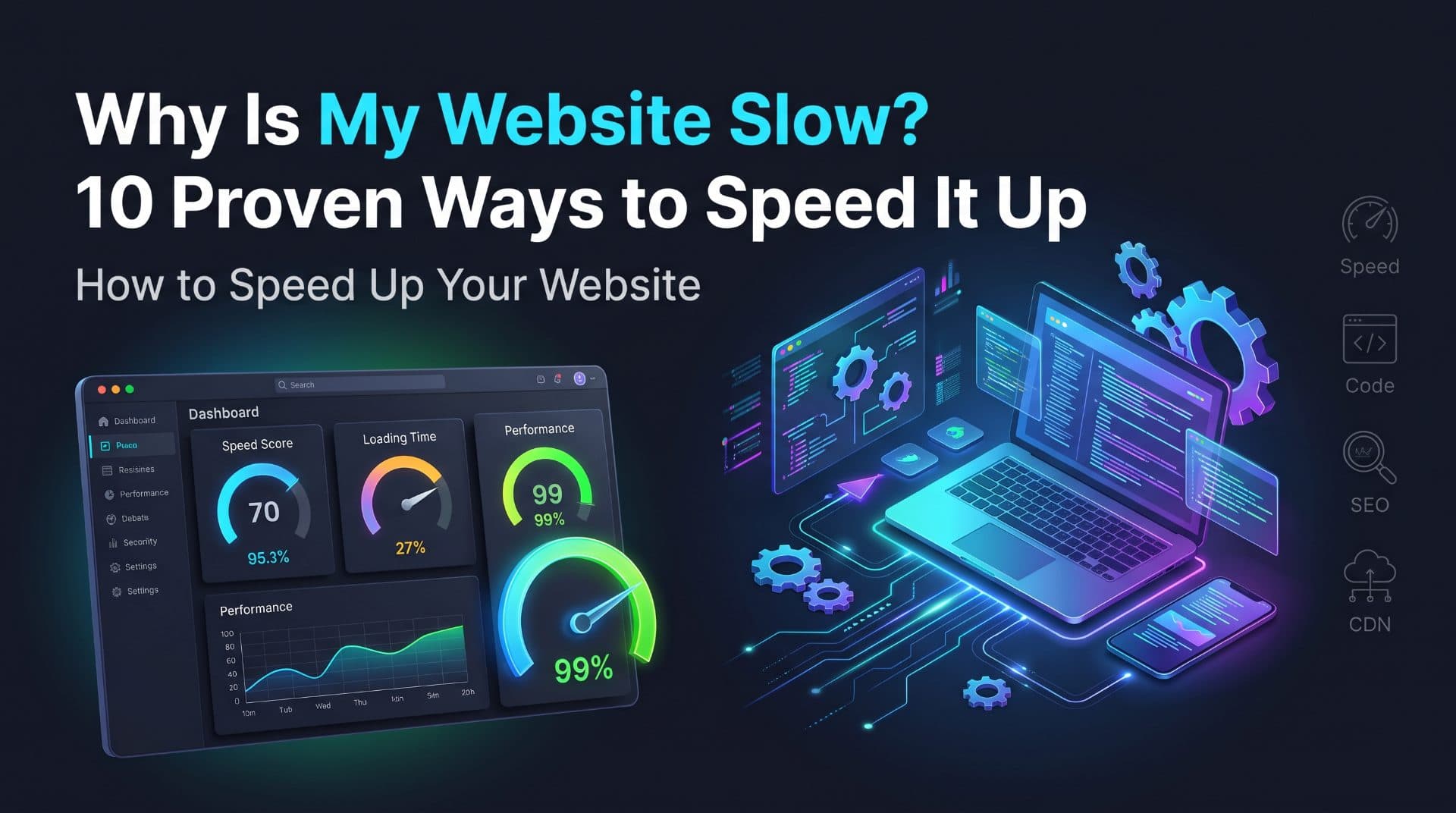
How to Pass Google Core Web Vitals in 2026: The Practical Speed Optimization Guide
Slow sites lose rankings, visitors, and enquiries. Learn what LCP, CLS, and INP mean, what slows modern websites down, and the techniques that get your Core Web Vitals passing.
Codezotic Team 1 min read
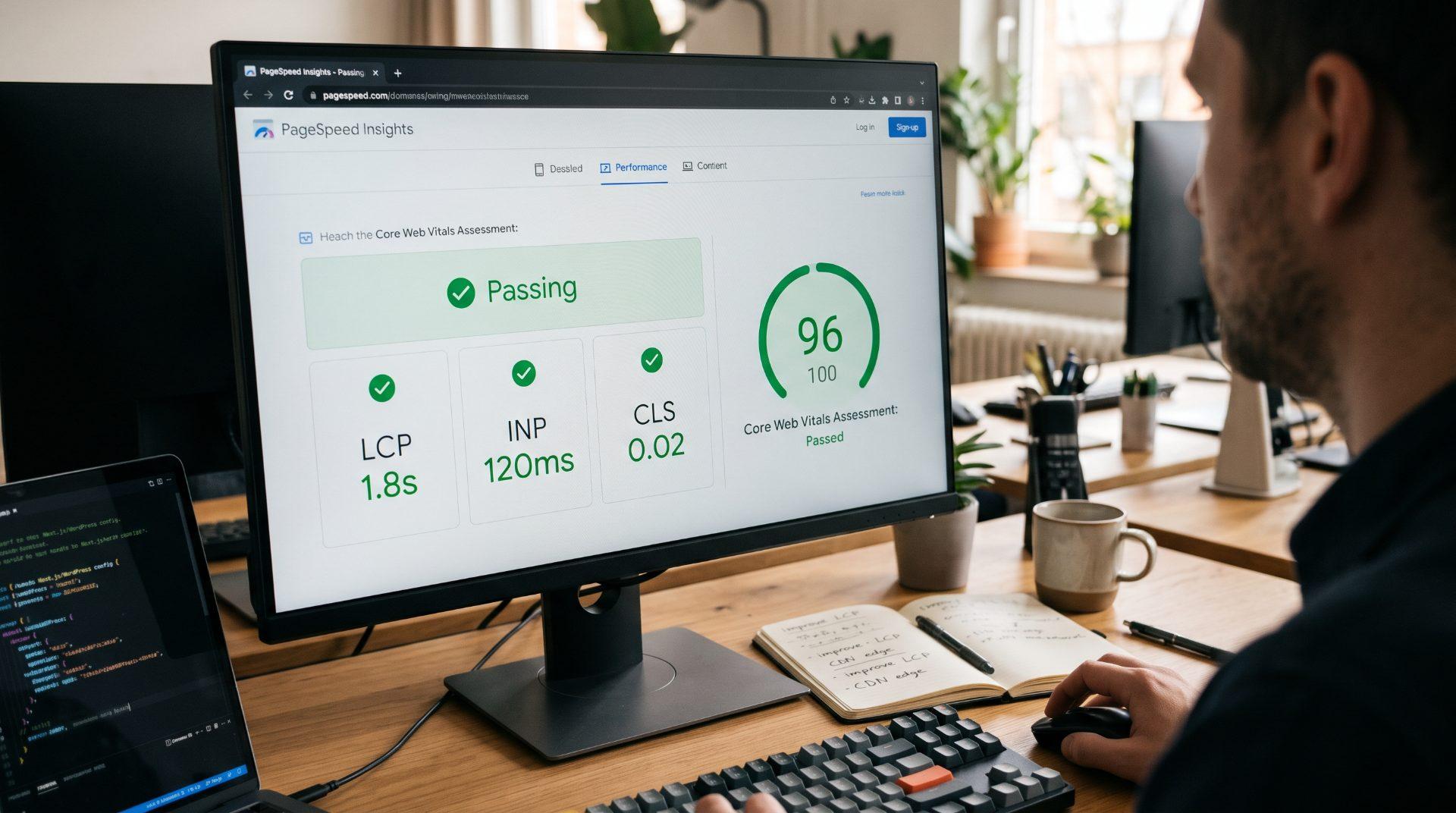
Slow sites lose rankings and visitors. This guide covers how to fix slow website loading and improve LCP, CLS, INP.
Why Google Cares About Core Web Vitals (LCP, CLS, INP)
- LCP: how fast the main content loads.
- CLS: how stable the layout is.
- INP: how quickly the page responds to input.
The True Cost of a Slow Website on Conversion Rates
Slow pages raise bounce rates and lower conversions, and they hurt rankings too.
5 Common Culprits Slowing Down Modern Websites
- Unoptimized images
- Bloated JavaScript bundles
- Un-cached database queries
- Too many third-party scripts
- Distant or slow hosting
Proven Techniques We Use to Achieve Sub-2.5s LCP
Here's how to speed up Next.js and WordPress:
- Next-gen WebP/AVIF format migration
- Edge CDN caching (Sydney & Auckland POPs)
- Script deferral and code splitting
When to Consider Professional Speed Optimization Services
If your scores still fail after quick fixes, get help. Our website speed optimization services and Core Web Vitals tuning act as a complete Core Web Vitals optimization service.
- #website speed optimization services
- #core web vitals optimization service
- #improve lcp cls inp
- #fix slow website loading
- #how to speed up nextjs and wordpress